
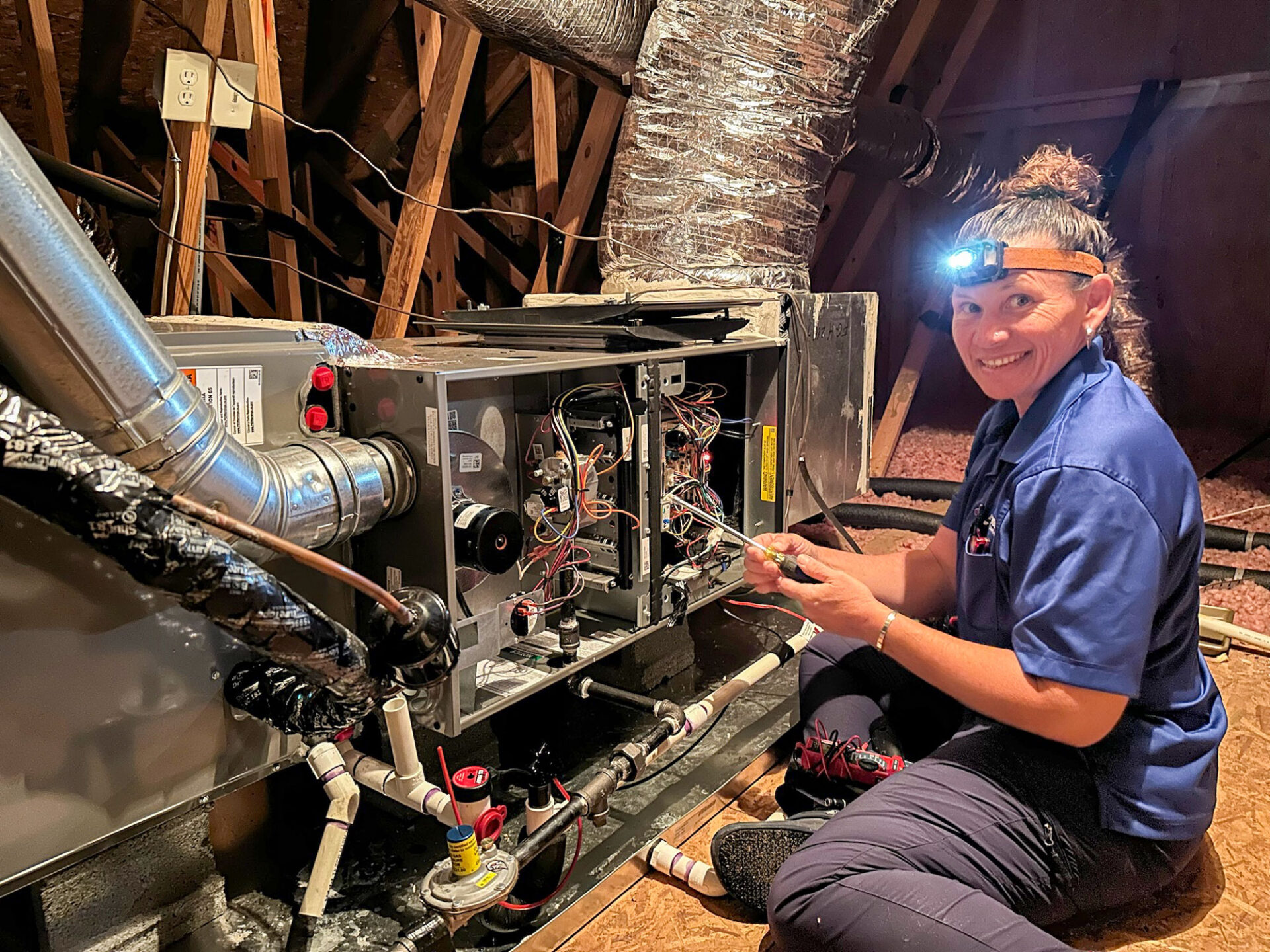
When a furnace stops working, the cause is usually one of a short list: a thermostat setting, a clogged filter, a tripped switch, or one part that has worn out. This guide goes symptom by symptom, from a furnace blowing cold air to one that won’t turn on at all, with the checks you can safely do yourself and the signs that mean it’s time to call.
Quick starting point: If you smell rotten eggs or a carbon monoxide alarm is sounding, stop here. Get everyone out of the house and call from outside. The steps are in the safety section below. For everything else, start with the five checks in the next section.
What Should You Check Before Calling for Furnace Repair?
Five checks solve a good share of furnace problems, and none of them requires opening the furnace. Work through them in order:
- Thermostat. Set it to HEAT, not COOL or OFF, and set the temperature a few degrees above the room. If the screen is blank, replace the batteries.
- Air filter. Pull it out and hold it up to a light. If you can’t see light through it, replace it. A clogged filter is behind many of the symptoms below.
- Furnace power switch. Most furnaces have a switch that looks like a light switch on or near the unit. It’s easy to flip off by accident.
- Breaker. Check the furnace breaker in your electrical panel. If it has tripped, reset it once. If it trips again, leave it off and call.
- Front panel. The furnace won’t run if the blower door isn’t seated, because a safety switch behind it cuts power. Press it firmly into place.
If the furnace still won’t heat after all five, the problem is inside the unit and needs a technician.
Why Is My Furnace Blowing Cold Air?
A furnace blowing cold air is most often a thermostat setting or a furnace that has shut its burners off for safety while the blower keeps running. Start with the thermostat fan setting. If it’s set to ON rather than AUTO, the blower runs all the time, and between heating cycles it moves unheated air through the vents. Switch it to AUTO. A gas furnace also runs its burners for a short time before the blower starts, so the first air out of the vents can feel cool for a moment. If the air stays cold through a full cycle, the burners aren’t staying lit. The usual causes are a clogged filter that lets the furnace overheat and trip its limit switch, a dirty flame sensor, or an ignition problem.
Do you have a heat pump instead of a furnace?
Many Charlotte homes heat with a heat pump, and a heat pump blowing cool air on a cold morning is often just its defrost cycle. Our guide to heat pump defrost mode vs. a real no-heat problem explains how to tell the difference.
Why Won’t My Furnace Turn On?
A furnace that won’t turn on at all is usually not getting power or a call for heat from the thermostat, so the five checks above are the place to start. If those check out and the furnace still does nothing, look at what it does when the thermostat calls for heat. Silence usually points to power, the thermostat, or its wiring. A click or a hum with no flame points to ignition. The furnace repairs Andersen sees most often in Charlotte are ignition failures and dirty or failed flame sensors, and a furnace that clicks but never lights usually has one or the other. Those are repairs for a technician. Igniters are fragile, and the gas valve and controls are not homeowner parts.
Why Does My Furnace Turn On, Then Shut Off?
A furnace that starts, runs for a few minutes, and shuts off is short cycling, and the most common cause is a clogged filter. When airflow is restricted, the heat exchanger runs too hot and a limit switch shuts the burners off to protect it. Once it cools, the furnace restarts and the cycle repeats. Replace the filter first. If the furnace lights and then shuts off within a few seconds, the flame sensor is the more likely cause: when it’s coated with residue, the furnace can’t confirm the flame and shuts the gas off. Short cycling can also come from a thermostat mounted near a supply vent or a sunny window, or a furnace that’s too large for the house.
Why Is My Furnace Leaking Water?
Water around a furnace usually means a high-efficiency furnace with a drain problem. Furnaces rated 90% AFUE or higher produce condensation as part of normal operation and send it out through a drain line. You can spot one by the yellow efficiency tag on the unit or the white PVC pipes coming off it. If that drain clogs, cracks, or comes loose, water backs up and pools around the cabinet. Many condensing furnaces also have a safety switch that shuts the furnace down when the drain backs up, so a leak and a no-heat call often arrive together. A whole-home humidifier mounted on the furnace is the other common source. If your furnace is a standard-efficiency model with a metal flue, water around it is not normal condensation and needs checking.
Turn the furnace off at its switch if water is reaching anything electrical, and dry the area while you wait for service.
Why Does My Furnace Smell Like Burning?
A burning dust smell on the first cold morning of the season is normal. Dust settles on the heat exchanger over the summer and burns off once the furnace runs, and it normally clears within an hour. Changing the filter helps it clear faster. A smell that lasts longer or comes back later in the season is different. A burning plastic or electrical smell can mean wiring or a motor is overheating: turn the furnace off at its switch and call. A rotten egg smell is natural gas, an emergency covered in the next section.
A fall heating tune-up before the weather turns cleans out much of that dust.
When Should You Stop and Call Right Away?
Some furnace symptoms are safety problems first and repairs second. Stop troubleshooting and act immediately if you notice any of these:
- A rotten egg smell. Piedmont Natural Gas, the gas utility for the Charlotte area, says: “If you have reason to suspect a gas leak, evacuate the area and call us at 800.752.7504 or 911.” Piedmont also says not to use light switches, anything electrical that could spark (including your cell phone), or matches, and not to look for the leak yourself.
- A carbon monoxide alarm. Shut the furnace off, get everyone outside, and call from there. Piedmont lists the symptoms of CO exposure as flu-like symptoms, headache, drowsiness, nausea, blurred vision, chest pains, ringing in the ears, and dizziness.
- A burning plastic or electrical smell, sparks, or smoke. Turn the furnace off and call.
- A breaker that trips again after one reset.
Piedmont’s natural gas safety guidance also notes that your nose isn’t always reliable. A cold, allergies, strong cooking smells, or simply getting used to an odor can mask the rotten egg scent, and the odorant itself can fade. Piedmont recommends a natural gas detector where the gas line enters your home, in addition to CO detectors.
Why Is My Furnace Making Noise?
Most furnace noises fall into a few groups, and the type of sound tells you how urgent it is:
- Rattling. Usually a loose panel, screw, or duct connection. Not urgent, but worth tightening at your next service visit.
- Scraping or metal-on-metal grinding. Often a loose or damaged blower wheel or a failing motor. Turn the furnace off and call, because running it can cause more damage.
- Whistling. Usually restricted airflow. Replace the filter and make sure supply and return vents aren’t blocked by furniture or rugs.
- Squealing. Often a blower motor bearing or belt.
- A loud bang or boom when the burners light. Gas building up before it ignites, usually from a dirty burner or ignition problem. Call for service.
- Light popping or ticking in the ducts. Metal ductwork expanding and contracting as it heats and cools. Normal.
Why Does My Furnace Keep Tripping the Breaker?
A furnace that trips its breaker is drawing more current than the circuit allows, and the breaker is doing its job by shutting it off. A clogged filter is a common cause, because the blower motor strains against restricted airflow. Blocked vents do the same. A furnace sharing its circuit with another appliance can overload it, and an electrical short or a failing blower motor will trip it too. Reset the breaker once after replacing the filter. If it trips again, leave it off and call. Resetting a breaker over and over keeps feeding power to whatever is failing.
Andersen publishes prices for the common electrical parts behind these calls: a capacitor replacement runs $140 to $475 and a contactor replacement $140 to $425, with the full list on our HVAC repair pricing page.
What Does a Blinking Light on My Furnace Mean?
A blinking light on a furnace is a diagnostic code from its control board, and the pattern tells a technician what the furnace detected. Most furnaces have a small window in the lower panel where you can see the light, and the code chart is usually printed on the inside of the panel door. Count the blinks and match them to the chart before you do anything else, because turning the power off typically clears the code. A steady or slow, regular blink usually means normal operation. A pattern that points to ignition, flame sensing, a pressure switch, or a limit switch is worth passing along when you call, since it helps the technician arrive with the right part.
How Andersen Handles Furnace Repair in Charlotte
Andersen Heating & Cooling repairs gas furnaces, heat pumps, air handlers and thermostats across the Charlotte area, seven days a week from 7:30 a.m. to midnight, with no weekend or after-hours upcharge. We’re not a 24-hour service, so a no-heat call after midnight gets the first slot the next morning. Our trucks carry the parts that fail most, so most furnace repairs finish on the first visit, and you get the price before any work starts. If the problem turns out to be a cracked heat exchanger or a furnace at the end of its life, the technician will tell you on site, and our guide to furnace and heat pump replacement covers the costs and options.
Maintenance plan members take 15% off any repair. Andersen holds North Carolina HVAC license L.34538 and has served Charlotte homeowners since 1984.
Frequently Asked Questions
Is it safe to keep resetting my furnace?
Andersen Heating & Cooling recommends one reset, at most. If a furnace or its breaker shuts off again after a single reset, a safety device is doing its job, and resetting it again keeps forcing a failing part to run. Replace the filter, check the thermostat and power switch, and if it shuts down again, leave it off and call.
How often should I change my furnace filter?
Check the filter monthly during heating season and replace it when you can’t see light through it. Thin one-inch filters usually need changing every one to three months, and homes with pets or construction dust need it sooner.
Can I fix a furnace flame sensor myself?
A flame sensor can be cleaned, but Andersen Heating & Cooling recommends leaving it to a technician. Reaching it means removing panels near the burners and gas valve, and the sensor itself is easy to bend or crack. If the furnace lights and shuts off within seconds, mention it when you call. Flame sensors are one of the most common furnace repairs Andersen sees in Charlotte.
What if my furnace stops working after midnight?
Andersen Heating & Cooling books repairs from 7:30 a.m. to midnight, seven days a week, and a call after midnight gets the first slot the next morning. Overnight, keep doors to unused rooms closed, and use space heaters only as the manufacturer directs, plugged directly into a wall outlet and away from anything that can burn. If you smell gas or a CO alarm sounds, leave the house and call 911 or Piedmont Natural Gas at 800.752.7504 regardless of the hour.
Get Your Furnace Running Again
If you’ve worked through the checks and the furnace still isn’t heating, call Andersen Heating & Cooling at (704) 596-2525 or request service online. See our furnace and heating repair page for what a repair visit includes.